
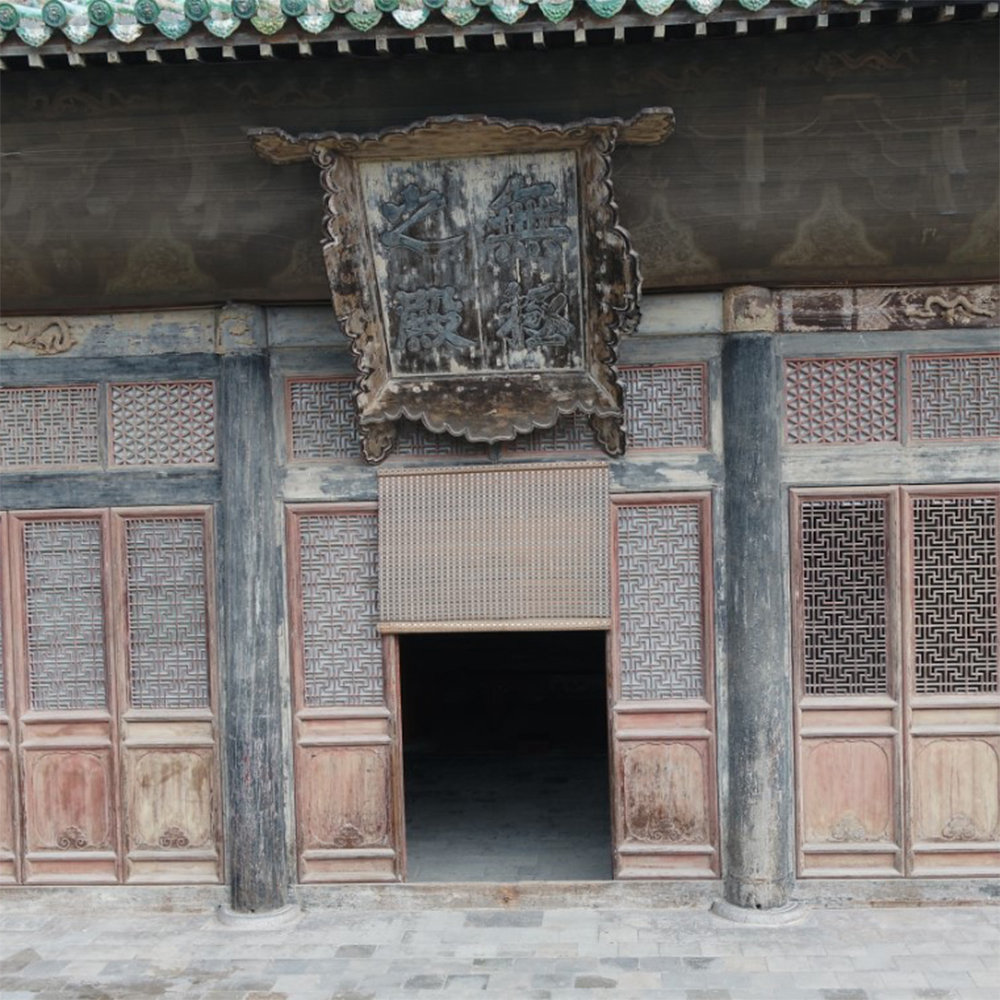
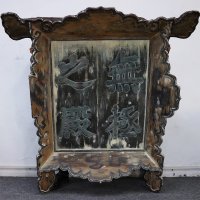
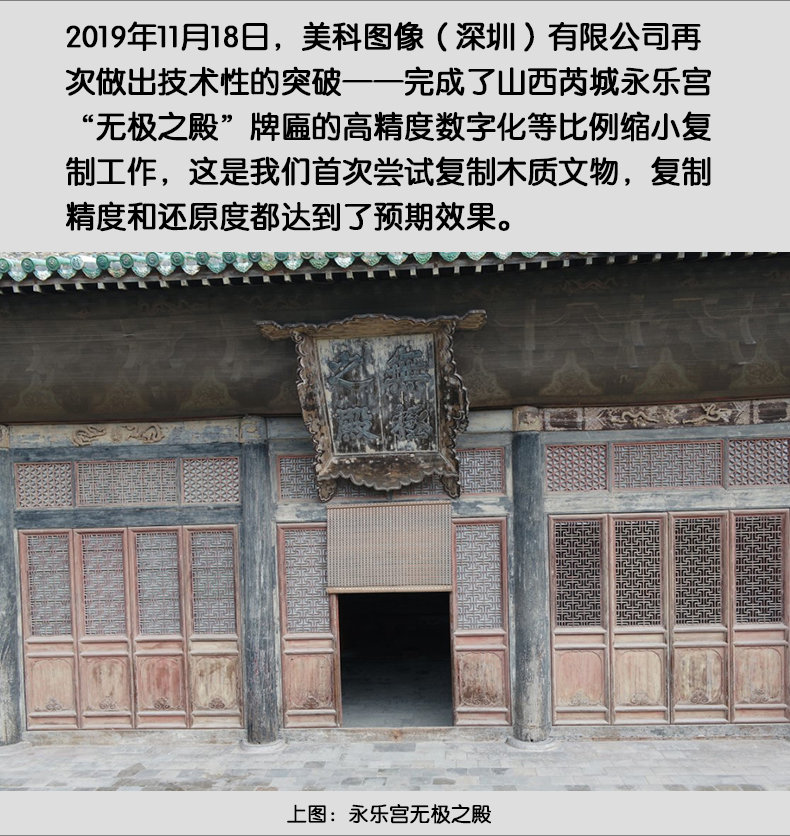
 On November 18, 2019, Shenzhen MIC Technology Co., Ltd. completed a scaled-down digital replica of the plaque above Wuji Hall at Yongle Palace in Ruicheng, Shanxi. This was the company’s first replica of a wooden artifact. It achieved the accuracy and fidelity the team had set out to attain. Photograph: Wuji Hall at Yongle Palace.
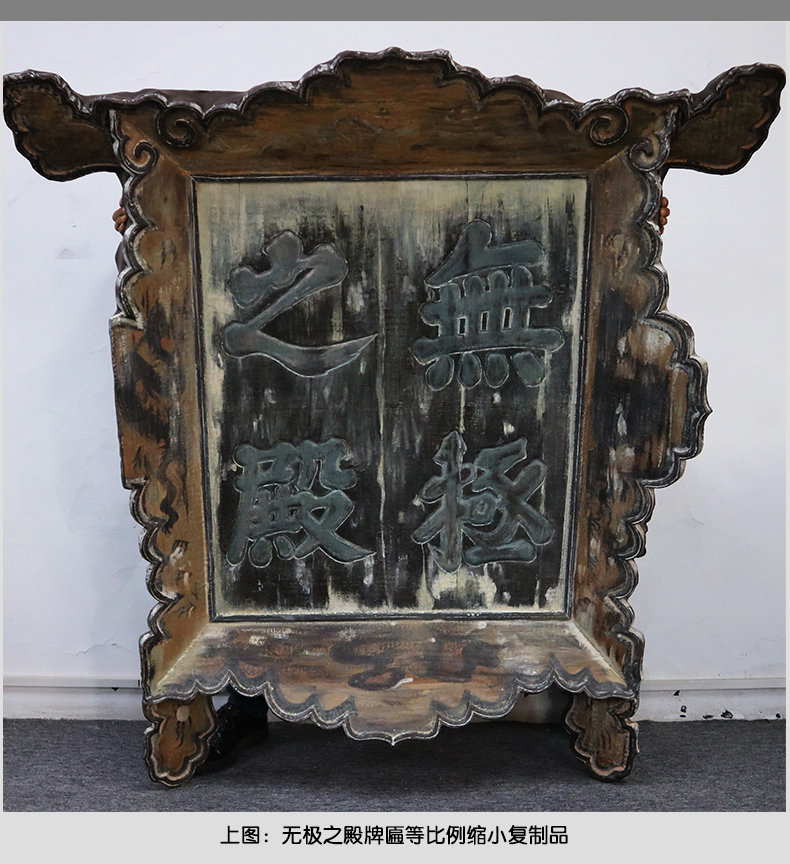 Reduced-scale replica of the plaque reading “Hall of the Infinite” (Wuji Hall).
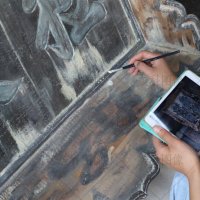
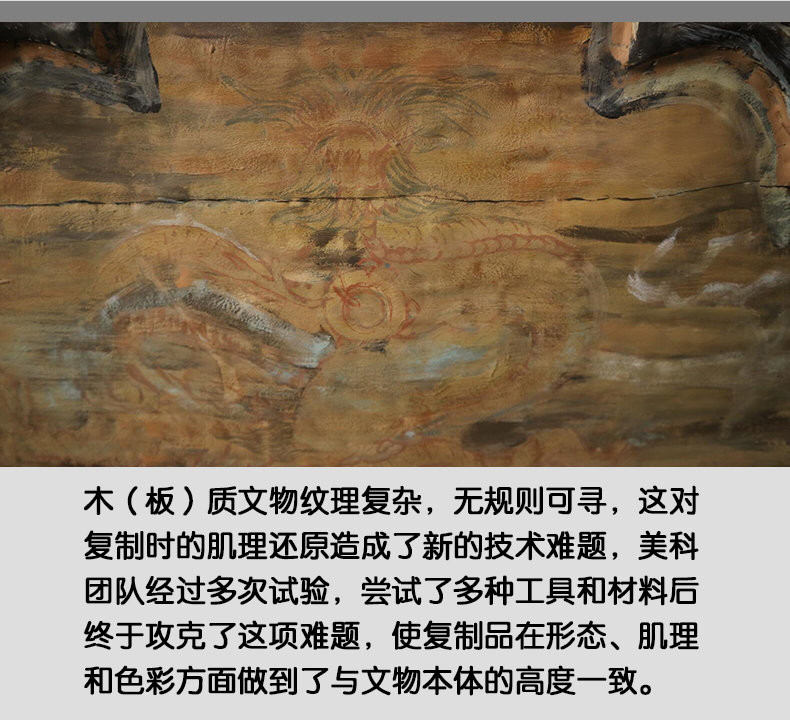 Wood’s irregular grain made its texture difficult to reproduce. After testing different tools and materials, the MIC team matched the replica’s form, surface and color closely to the original.
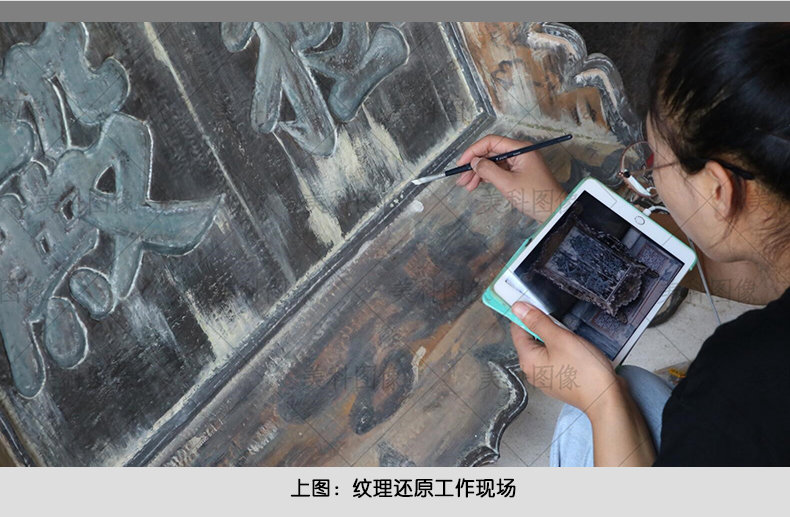 Reproducing the texture of the original surface.
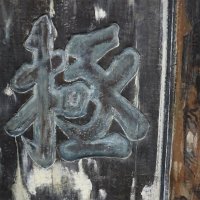
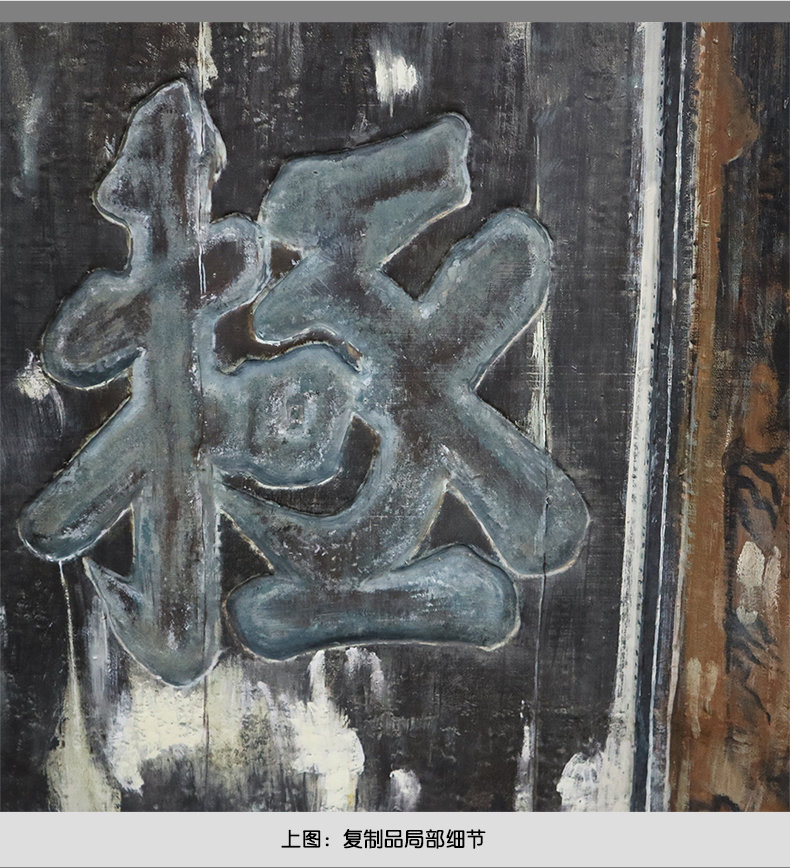 Surface detail of the replica plaque.
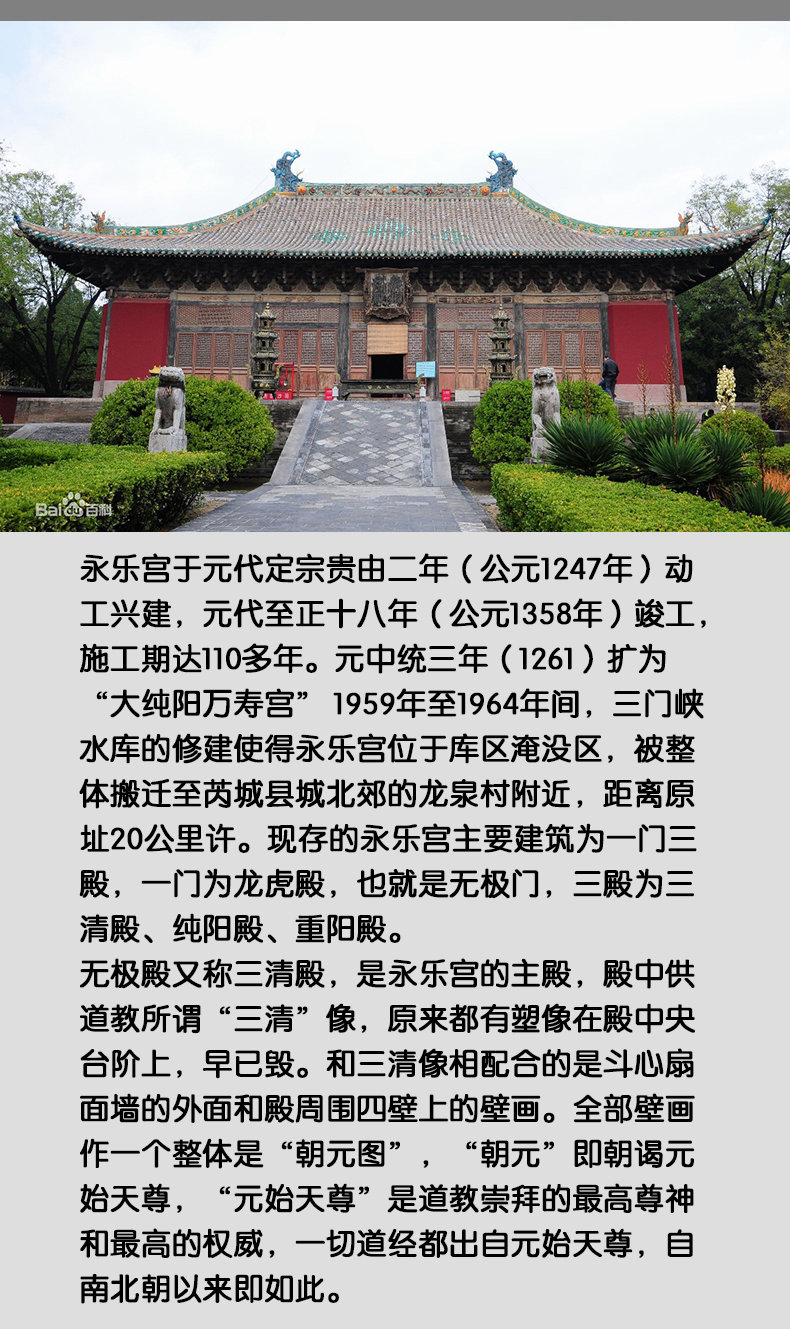 Construction of Yongle Palace began in 1247 and ended in 1358, more than 110 years later. In 1261 the complex was expanded as Dachunyang Wanshou Palace. Between 1959 and 1964 the buildings were moved out of the Sanmenxia Reservoir flood zone to a site near Longquan Village, about 20 kilometers away, north of Ruicheng. Its principal surviving structures are the Dragon and Tiger Hall (Wuji Gate) and the Sanqing, Chunyang and Chongyang halls. Wuji Hall, also known as Sanqing Hall, is the main hall. Its lost central statues represented the Daoist Three Pure Ones. Murals on the altar screen and surrounding walls form the composition “Homage to the Origin,” depicting an audience with Yuanshi Tianzun, the supreme Daoist deity. The text traces this conception of divine authority and the origin of Daoist scriptures to the Southern and Northern dynasties.
MIC Imaging completed a high-resolution, reduced-scale replica of the “Wuji zhi Dian” plaque at Yongle Palace in Ruicheng, Shanxi. This was our first attempt at reproducing a wooden artifact. The finished piece met our targets for precision and fidelity.