
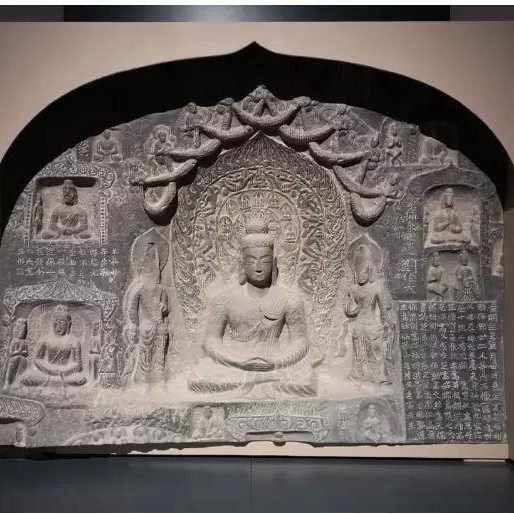
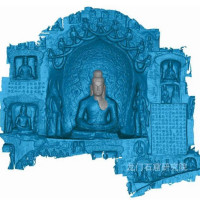
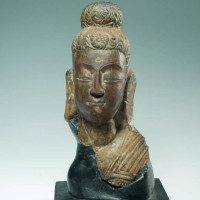
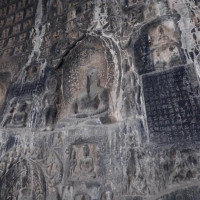
Fourteen years after the head from the Gaoshu niche returned, the Longmen team undertook a high-resolution survey of the niche in early 2019. They modeled the head at the same resolution, aligned the models and printed the reconstructed sculpture. It was an experiment in matching a returned object to the surviving cave fabric. The work formed part of a project by the Longmen Grottoes Research Institute, Zhejiang University and MIC Imaging to reproduce the four major niches and the Gaoshu niche in Guyang Cave. Photography and 3D scanning recorded color, geometry and spatial relationships in editable digital files. Each object’s archive can be encrypted and reused for display, research, conservation and reconstruction without wearing the original.
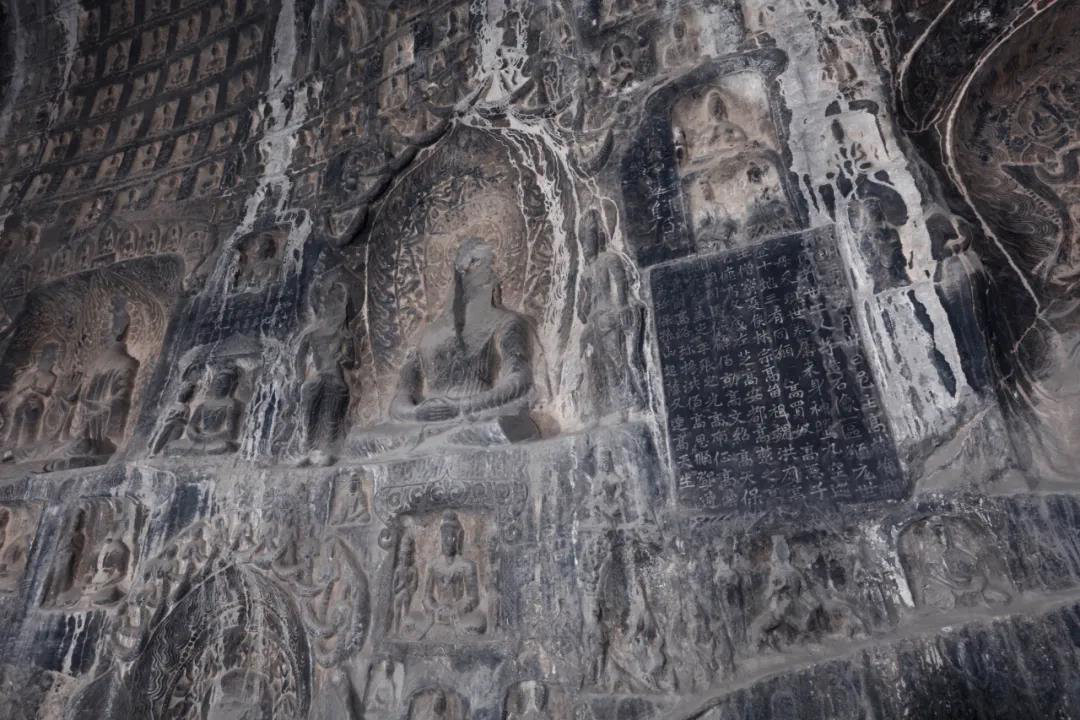
Above: The Gaoshu niche as it survives today
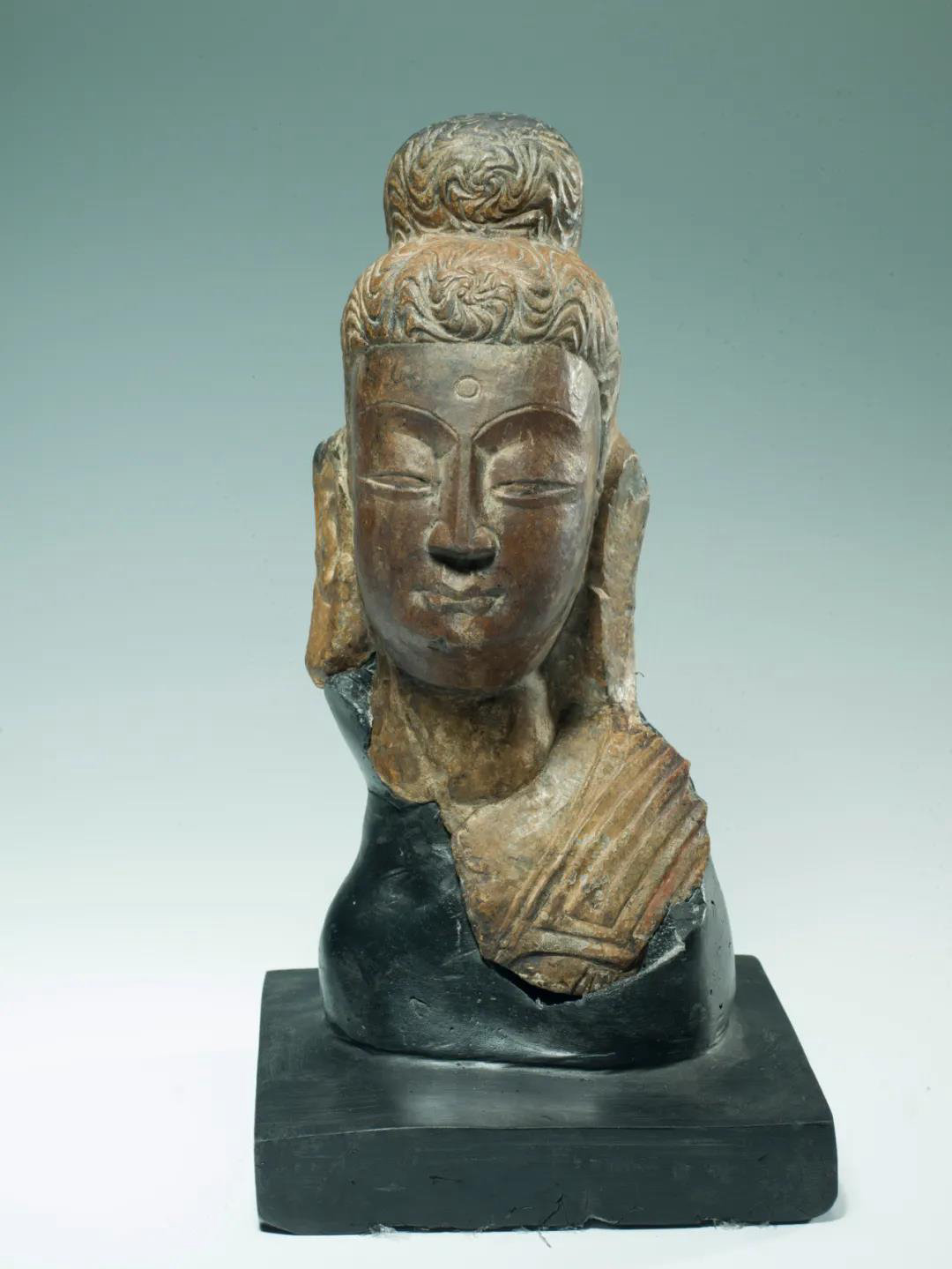
Above: The returned Buddha head from the Gaoshu niche
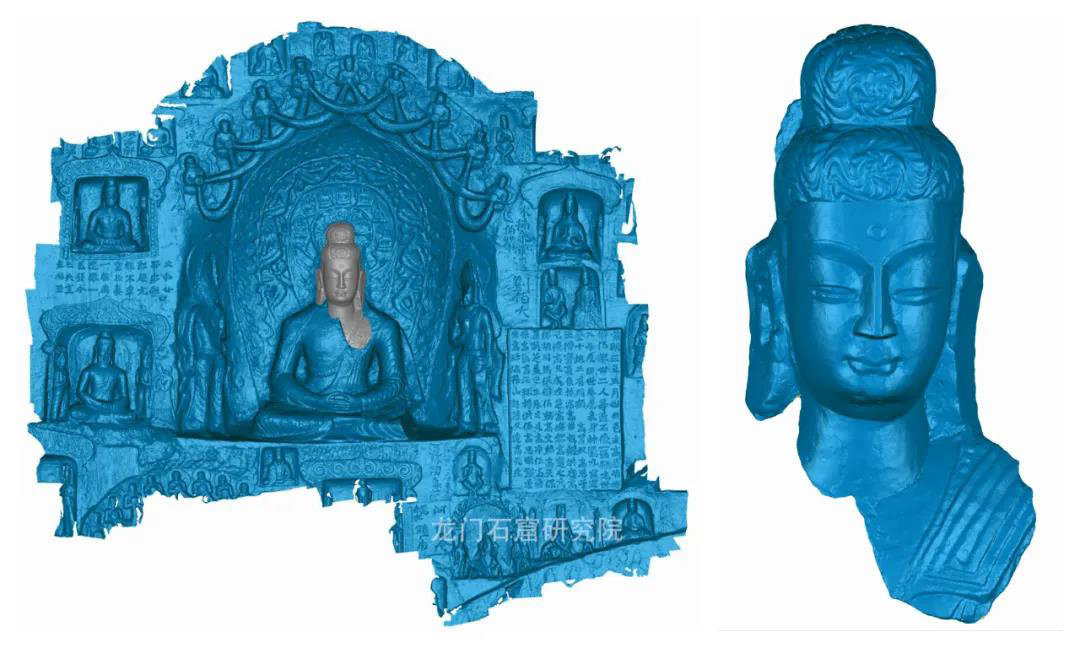 Image credit: Longmen Grottoes Research Institute.
Above: Illustration of the virtual restoration
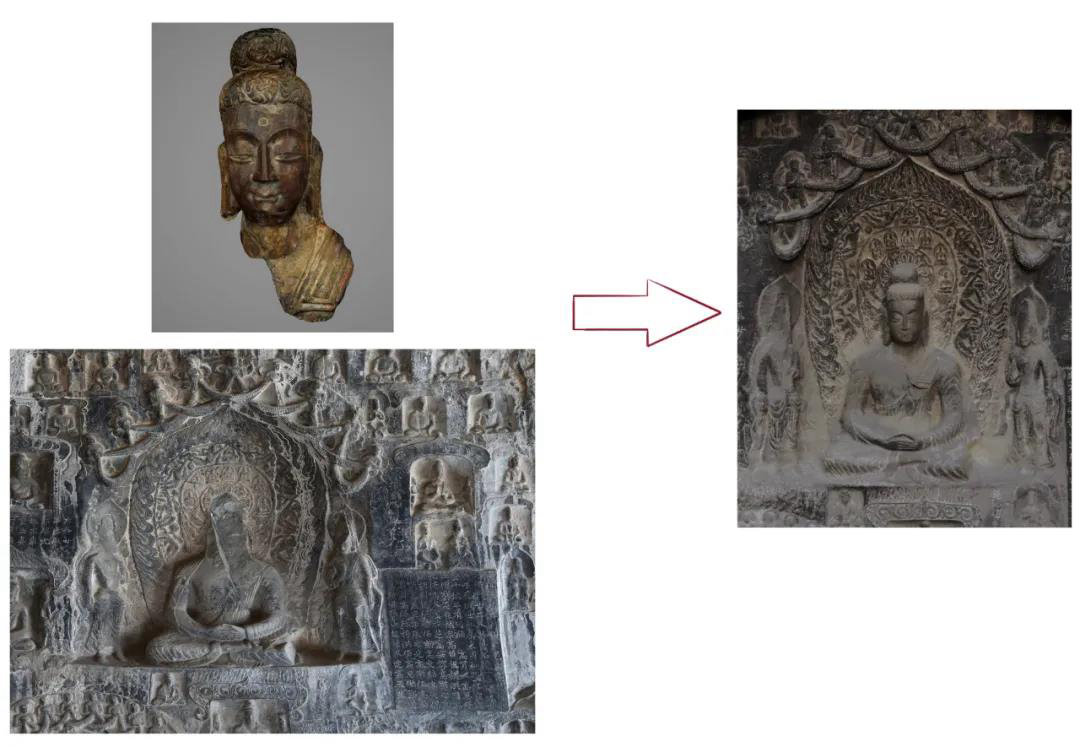
Above: Stages of the virtual restoration
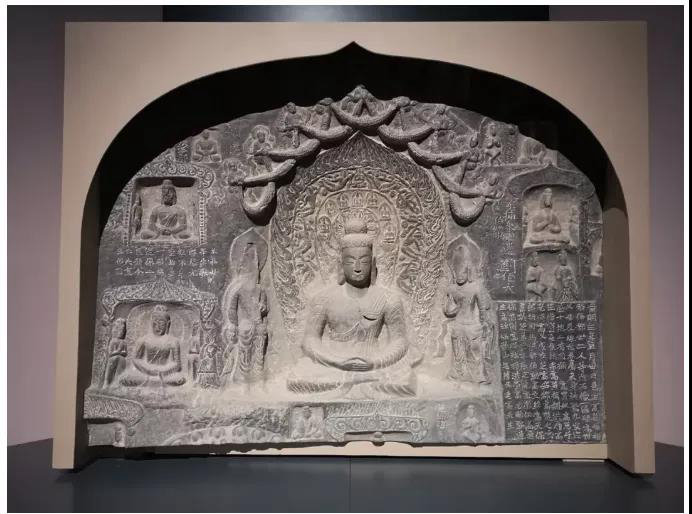
Above: The completed virtual restoration
The Gaoshu niche sits high on the north wall of Guyang Cave. Thirty-two members of a devotional society, including Gaoshu and Xie Bodu, commissioned it for their parents and living relatives. It was completed in 502, the third year of the Northern Wei Jingming era. The head of its principal Shakyamuni Buddha was stolen between 1907 and 1920. It went first to France, then Belgium, and was acquired by an American collector in the late 1970s. Chen Zhejing purchased it in spring 1991. The slender face and robe folds suggested Longmen, so he sent photographs to Professor Tang Chi at the Central Academy of Fine Arts. Tang identified the style and dress with Guyang Cave. In October 1992, Chen visited Longmen and found that the break matched the figure in the Gaoshu niche exactly. In December 2004, with approval from China’s national heritage authority, the China Cultural Relics Information and Consultation Center brought the head back to China.