
Yungang’s Seven Buddhas Travel to Hefei, Anhui
On May 15, 2020, “Convergence: Artifacts from Northern Wei Pingcheng in the Fourth and Fifth Centuries” opened in the second-floor temporary gallery of Anhui Museum's new building. Anhui Museum, the Datong Institute of Archaeology and Datong Museum organized the exhibition.
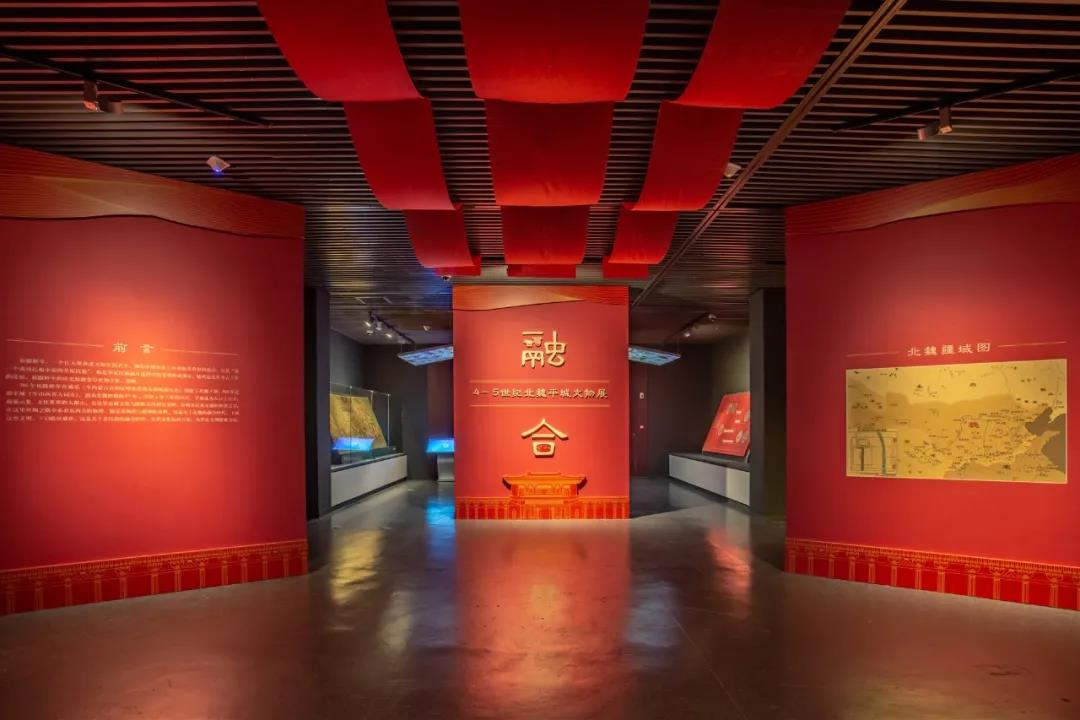 Convergence: Artifacts from Northern Wei Pingcheng in the Fourth and Fifth Centuries. Left panel: Introduction. Right panel: Map of Northern Wei territory.
1600years ago, the Tuoba Xianbei of the northern grasslands established the Northern Wei dynasty. They rode south and moved their capital to Pingcheng, today's Datong in Shanxi. Here the northern frontier met the Central Plains and pastoral and farming cultures converged. Northern Wei enjoyed a flourishing97years, and the Tuoba Xianbei became“the first steppe people to establish lasting roots in the Central Plains”. Their arrival transformed Pingcheng into a cosmopolitan city. Across the long sweep of history, Northern Wei Pingcheng's story was“brief”yet“remarkable”. In fewer than100years, the city left a vivid record of interaction and exchange between peoples and an extraordinary cultural legacy: the Yungang Grottoes.
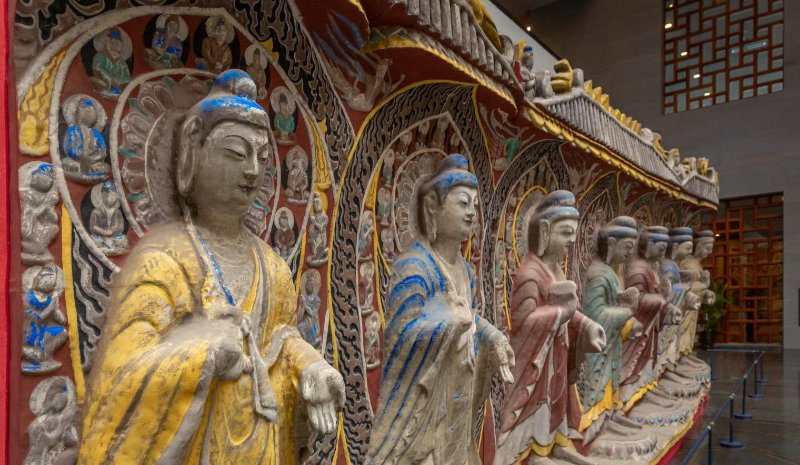
The replica Seven Standing Buddhas in the gallery at Anhui Museum
This time, MIC Imaging's replica of the Seven Standing Buddhas from Yungang Cave13, shown in Shanghai late last year, traveled to Hefei in Anhui, a city once contested by Northern Wei and Southern Liang.
The Seven Buddhas are Vipashyin, Shikhin, Vishvabhu, Krakucchanda, Kanakamuni, Kashyapa and Shakyamuni. The lineage originated in India and appears in early Buddhist texts. Different schools produced Chinese versions of the four Agamas in the Eastern Jin period. The sequence is set out in Gautama Sanghadeva's Ekottarika Agama and in the Dirgha Agama translated by Buddhayashas and Zhu Fonian in the Hongshi era of Later Qin. Devotion to the Seven Buddhas spread during the early Northern Wei period, when Pingcheng was the capital.