
Cave Temple Conservation | New Approaches to Protecting and Presenting the Yungang Grottoes
Combining Prevention and Treatment in Conservation Research
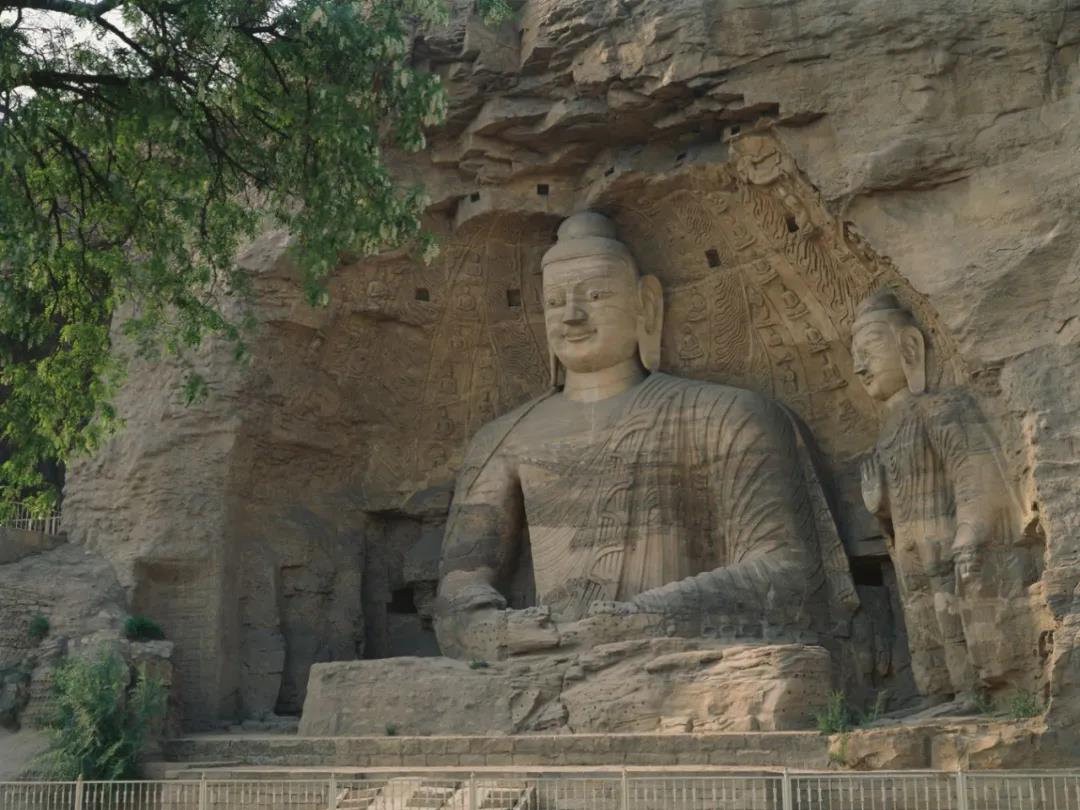
The Yungang Grottoes Research Institute gives equal weight to emergency measures and preventive conservation. Through routine maintenance and monitoring, it aims to track change, anticipate risks, give timely warning and intervene early. Recent work has included constructing protective eaves at the Wuhua Caves, stabilizing rock and restoring painted sculpture and wall paintings. Yungang submitted 16 conservation projects in 2020. Applications were completed for emergency reinforcement at the Wuguantun Grottoes and for the second phase of emergency reinforcement at Yungang Cave 3. Submitted plans included surveys and designs for emergency stabilization, water exclusion and drainage at Cave 5 and the caves around Luohan Hall, the second-phase reinforcement design for Cave 3, and surveys and designs for unstable rock faces and cliff-top drainage at Caves 1–3.
Building a Center for Yungang Studies
Since Xi Jinping’s visit, the National Cultural Heritage Administration, the CPC Shanxi Provincial Committee and the Shanxi Provincial People’s Government have held meetings to establish the aims of Yungang studies. The field began with Japanese scholarship in the early twentieth century and developed through Chinese research. The Yungang Grottoes Research Institute’s 20-volume Complete Collection of the Yungang Grottoes, published in 2019, marked its formal establishment. Shanxi University and Datong University have set up dedicated institutes to train specialists. The Yungang Grottoes Research Institute, the field’s principal research organization, is expanding its work with the Chinese Academy of Cultural Heritage, Dunhuang Academy, the Shanxi Provincial Institute of Archaeology, Peking University, Shanxi University, Datong University and Shandong University of Art and Design. Their work includes Northern Wei ethnology, Yungang iconography, Silk Road culture and the integration of peoples. The goal is to document exchanges among the peoples of the Northern Wei and develop the disciplines into a coherent field. Future research will examine the many cultural traditions in Yungang’s art, tracing their origins, identifying their forms and patterns, and sharing their significance with the public. The institute hopes this work will sustain Chinese traditions, cultural confidence and new scholarship.
Developing an Operating Model for the Yungang Grottoes
In 2019, the institute also became the Shanxi Research Center for Stone Heritage Conservation. Its responsibilities now extend beyond Yungang and associated remains to conservation and research at other cave temples in Shanxi. In recent years it has formed four specialist companies covering stone heritage, painted clay sculpture conservation and restoration, digital technology, and movable heritage. It has also trained a professional conservation team. By inviting specialists in, sending staff out and working with Chinese universities and research institutes, it is building expertise for conservation and academic research. As public institutions undergo reform, the institute is reviewing its operations and staffing to develop a model suited to the conservation and management of a World Heritage site.
Bringing Culture and Tourism Together at Yungang
As a World Heritage site, Yungang represents Shanxi to the world and leads Datong’s cultural tourism sector. Its managers must protect the caves while welcoming visitors. To ease pressure from crowds, the institute created the Yungang Museum, Shi Bing Art Museum, Yungang Art Museum, Institute History Museum, Yungang Shadow Puppet Museum, Dongshan Art District, film and television pavilion, Chen Yungang Sculpture Museum and Yungang Book House. These venues explore more of Yungang’s culture, offer visitors a wider range of experiences and reduce the strain on the caves themselves.